English (EN)
 Deutsch (DE)
 Nederlands (NL)
 中文 (ZH)
Industrial surfactant solutions
Advanced specialty chemicals engineered to optimise separation, enhance recovery, and improve process reliability across oil & gas operations
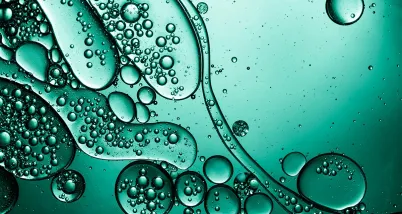
In oil and gas production, the real challenge is not just extraction, but managing the complex mixtures that come with it. Water, salts, solids, and other impurities create stable emulsions that reduce product quality and operational efficiency. Our specialty chemical solutions are designed to solve these challenges, enabling cleaner separation, improved recovery, and more reliable processing.
Key benefits
- Efficient oil-water separation
- Enhanced production and recovery
- Improved operational efficiency
- Protection of infrastructure
- Field-proven performance in demanding conditions

Applications
Our industrial surfactant solutions have a wide range of applications.
-
Crude oil production and separation processes
Surfactants play a key role in crude oil production by improving fluid behaviour and enabling efficient phase separation. They support smoother extraction and processing by reducing interfacial tension and stabilising or breaking emulsions where needed.
-
Oilfield emulsion treatment (water-in-oil and oil-in-water systems)
Specialised surfactants and demulsifiers are used to treat complex oilfield emulsions, breaking stable water‑in‑oil and oil‑in‑water systems. This ensures faster separation, improved crude quality, and reduced processing challenges in production operations.
-
Pipeline and transportation systems (flow assurance)
Surfactant technologies support flow assurance in pipelines by maintaining stable fluid properties and preventing blockages caused by contaminants or phase instability. This ensures reliable transport of crude oil with optimal flow rates and reduced operational risk.
-
Refinery preprocessing and desalting operations
In refinery processes, surfactants assist in desalting and preprocessing by separating water, salts, and impurities from crude oil. This improves feedstock quality and protects downstream equipment from fouling and corrosion.
-
Produced water treatment and reuse/disposal
Surfactants enable effective treatment of produced water by separating residual oil and contaminants, allowing for safer disposal or reuse. This supports environmental compliance and more sustainable oil and gas operations.
-
The science behind the technology
In petroleum production, crude oil rarely comes alone. Under turbulent flow conditions, oil mixes with water, salts, and fine solids pres...In petroleum production, crude oil rarely comes alone. Under turbulent flow conditions, oil mixes with water, salts, and fine solids present in the reservoir, forming highly stable emulsions. Stabilised by natural surfactants, these emulsions resist separation even after extended settling times, creating major operational challenges. Stable oilfield emulsions directly impact efficiency and cost across operations:
- Reduced crude oil quality and market value
- Increased treatment costs and energy consumption
- Corrosion and scaling in pipelines and processing equipment
- Higher transportation costs due to excess water content
- Complications in downstream refining and processing
To address these challenges, HeiQ's oilfield demulsifiers are engineered to break water-in-oil emulsions rapidly and completely, enabling efficient separation and maximising oil recovery.
At the molecular level, the demulsifier technology acts at the oil–water interface to destabilise emulsions and trigger separation through multiple synergistic mechanisms:
- Surface activity: Reduces interfacial tension between oil and water, weakening the emulsion structure
- Flocculation: Causes dispersed water droplets to aggregate, increasing their size and improving separation speed
- Coalescence: Promotes the merging of small droplets into larger ones that separate and settle more easily
- Solids wetting: Detaches fine solids from the oil–water interface, eliminating key stabilising elements
The result: cleaner oil, more efficient operations.
By breaking emulsions effectively, the technology delivers:
- Cleaner crude oil with lower basic sediment and water (BS&W) content
- Improved oil recovery and overall process efficiency
- Clearer separated water, easier to treat, reuse, or dispose
- Reduced operational costs and smoother downstream processing
-
Frequently Asked Questions (FAQ)
-
What are oilfield demulsifiers and why are they important?
-
How do demulsifiers improve oil recovery and production efficiency?
-
Can demulsifiers be used across different crude oil types and operating conditions?
Don’t see the answer you’re looking for?Explore HeiQOilfield demulsifiers are specialty chemicals designed to break stable emulsions formed when crude oil mixes with water during production. They are essential for improving crude oil quality, enabling efficient oil–water separation, reducing processing costs, and ensuring smoother downstream refining operations.
Demulsifiers enhance oil recovery by enabling faster and more complete separation of water from crude oil. By reducing interfacial tension and promoting droplet coalescence, they increase the amount of recoverable oil, minimise treatment time, and optimise overall production efficiency.
Yes, modern demulsifier formulations are designed to perform across a wide range of crude oil compositions, salinity levels, and temperature conditions. This makes them suitable for both onshore and offshore operations, as well as low- and high-temperature separation systems.
Demulsifiers help prevent a range of operational challenges by enabling effective separation, including corrosion and scaling in pipelines, excessive water content in transported crude, higher energy consumption during processing, and inefficiencies in refinery operations.
- Improved oil quality: Reduces basic sediment and water (BS&W) content, helping meet pipeline and refinery specifications while maximising production value
- Reduced treatment costs: Enables more efficient separation, lowering energy consumption and reducing overall chemical usage
- Equipment protection: Minimises corrosion and scaling in pipelines and processing equipment, extending asset lifetime and reducing maintenance
- Better water management: Produces cleaner separated water that is easier to treat for disposal or reuse, supporting more responsible water management practices
-
-
Product line-up
-
CHEMTEX CR Series Demulsifiers
-
Electrolyte-Tolerant Formulations
-
High-Temperature Stable Demulsifiers
-
Heavy Oil Demulsifiers
We offer a range of demulsifiers for oilfield scenarios, each designed for specific conditions and challenges.
A
-
CHEMTEX CR Series Demulsifiers
These products represent our core line of water-in-oil demulsifiers. They are effective across a wide range of crude oil types and production conditions. They work well in both low-temperature separation facilities and high temp treatment systems.
-
Electrolyte-Tolerant Formulations
For operations in high-salinity environments (including offshore platforms and certain geological formations), we’ve developed demulsifiers for oilfield applications that maintain effectiveness even in the presence of high dissolved solids content. These products continue to perform where other demulsifiers might lose effectiveness.
-
High-Temperature Stable Demulsifiers
In thermal recovery operations such as steam-assisted gravity drainage (SAGD) or other enhanced oil recovery methods, we offer thermally stable demulsifiers for oilfield use that maintain their separation capabilities even at elevated temperatures.
-
Heavy Oil Demulsifiers
For operations dealing with viscous heavy crudes, we’ve developed specialized formulations that effectively separate emulsions despite the challenging physical properties of these oils. Our demulsifiers for oilfield heavy oil applications work effectively with the unique characteristics of these difficult-to-process crudes.
-
Related products